
Artificial Intelligence
AI Prompts for Beginners are the starting point for getting useful answers from artificial intelligence tools. Whether you use AI for writing, learning, coding, planning, or summaries, the quality of your prompt directly affects the quality of the output.
Many people think AI tools do not work well. However, in many cases, the real problem is unclear instructions. AI tools can only respond based on the information you provide.
So, if your prompt is vague, incomplete, or confusing, the answer may also be weak. On the other hand, clear prompts can produce better, faster, and more useful results.
What Is an AI Prompt?
An AI prompt is the instruction, question, or request you give to an AI tool.
It tells the AI what you want. This may include the topic, purpose, format, tone, or level of detail.
For example, instead of writing write email, you can write write a professional follow-up email to a client after a meeting. This gives the AI more context and improves the result.
Why Prompts Matter
AI tools are powerful, but they depend on input quality. Better prompts create better responses.
A good prompt saves time because you need fewer corrections. It also improves clarity and reduces confusion.
This is why prompt writing is becoming an important digital skill.
What Makes a Good Prompt?
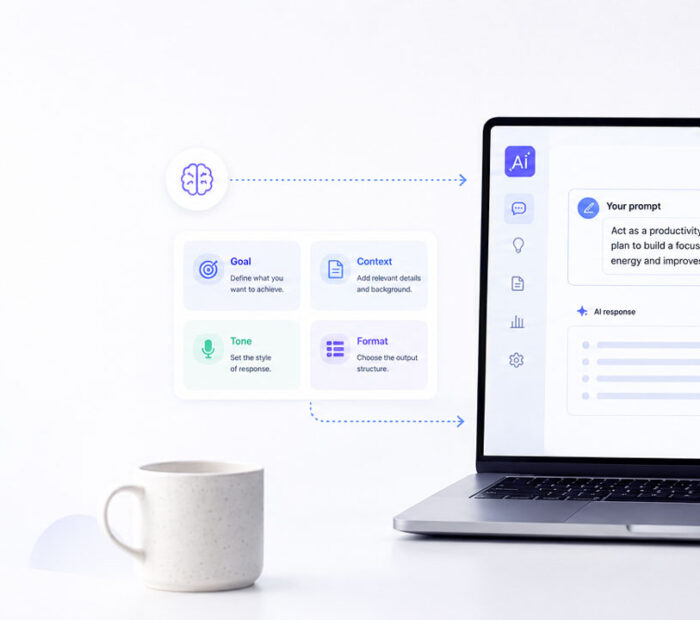
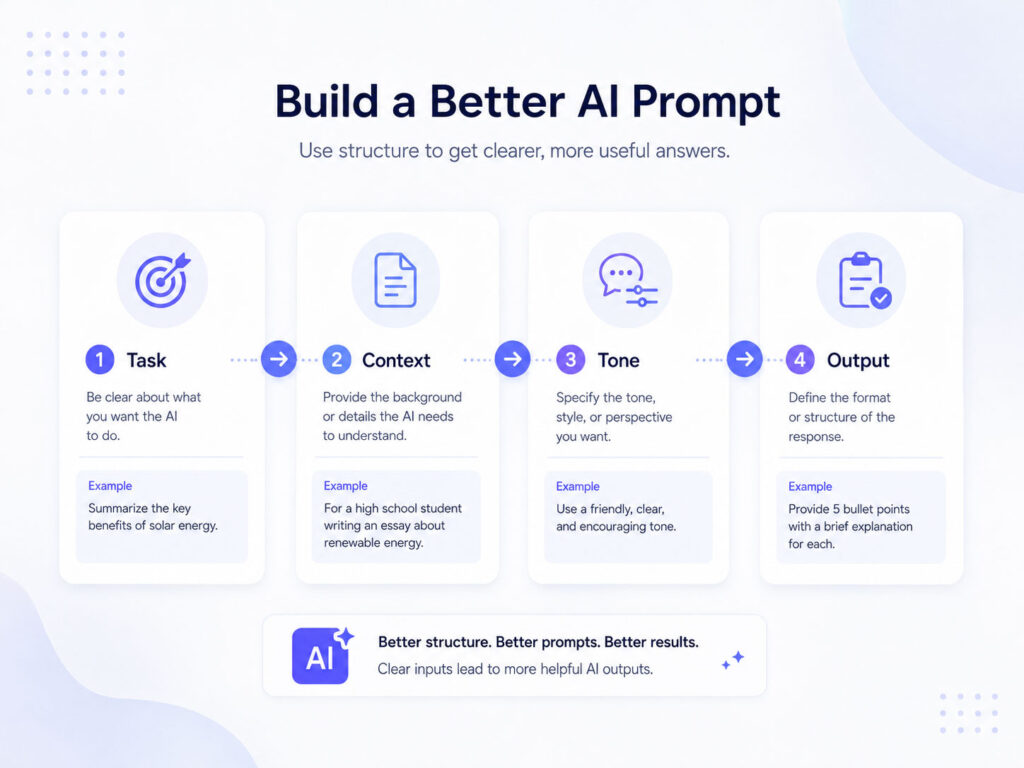
A good prompt usually has four main parts.
| Part | Purpose |
|---|---|
| Task | What you want AI to do |
| Context | Extra information to guide the response |
| Tone | How the answer should sound |
| Format | How the output should be structured |
For example:
Write a beginner-friendly blog on cloud storage.
Use simple English.
Add examples.
Keep it under 800 words.
This prompt is stronger because it clearly explains the task, audience, and structure.
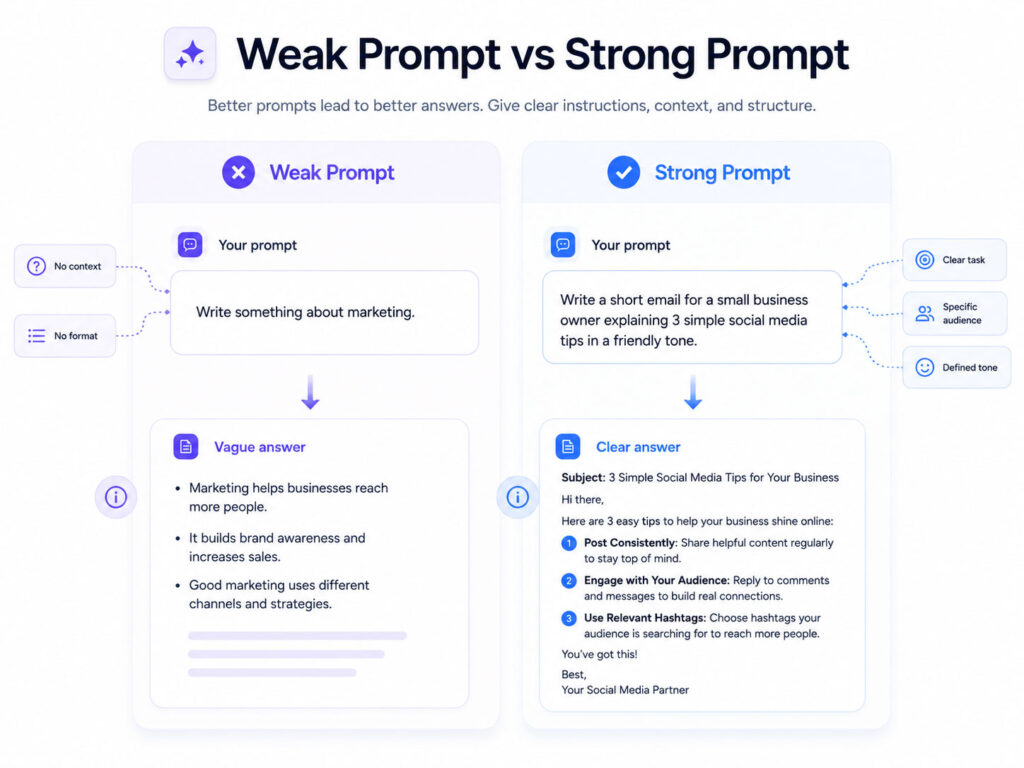
Weak Prompt vs Strong Prompt
Let’s compare two prompts.
| Weak Prompt | Strong Prompt |
|---|---|
| Explain AI | Explain AI in simple words for a beginner with 3 practical examples |
| Write email | Write a polite email to request project status from a client |
| Make plan | Create a 7-day beginner roadmap to learn Git commands |
The strong prompt provides more direction. Therefore, the AI can create better results.
Common Prompt Mistakes
- Writing too little information
- Not mentioning the audience
- Ignoring tone requirements
- Asking multiple unrelated things at once
- Not reviewing the output properly
These mistakes often create weak answers.
Best Practices for Writing Better AI Prompts
Follow these tips to improve your prompts:
- Be specific about your goal.
- Add context whenever needed.
- Define the tone clearly.
- Mention the target audience.
- Ask for examples if required.
- Set output format like bullet points, tables, or paragraphs.
- Review and improve your prompt if needed.
Prompt writing improves with practice. The more you refine your prompts, the better the output becomes.
Where Can You Use AI Prompts?
AI prompts are useful in many daily situations.
- Writing emails and replies
- Creating blog drafts
- Learning new topics
- Debugging code
- Creating study notes
- Making task plans
- Summarizing meetings
- Generating content ideas
Because of this, learning prompt writing can improve productivity in many areas.
Conclusion
AI Prompts for Beginners are simple to learn but powerful to use. Better prompts can save time, improve output quality, and help you use AI more effectively.
Start with clear instructions, add context, define the tone, and review the result. Over time, you will understand how small changes in prompts can create much better answers.
In short, better prompts lead to better AI results.

AboutTPJ Technical Team
The Project Jugaad Technical Team creates practical, easy-to-follow content on software development, web technologies, artificial intelligence, cybersecurity, cloud platforms, and digital tools. Our articles are informed by more than 13 years of hands-on experience with .NET, Angular, SQL Server, AWS, WordPress, Linux hosting, application deployment, and real-world troubleshooting. Each guide is researched, reviewed, and updated to provide accurate, useful, and actionable information for developers, businesses, and everyday technology users.