
Cyber Security
Deepfake Scams are becoming a serious online safety concern because artificial intelligence can now create realistic images, voices, and videos. These fake media files may look or sound real, but they can mislead people.
Attackers may use deepfakes to create fake videos, clone voices, spread false information, or trick users into sharing money, passwords, or personal details.
Because of this, it is important to understand how deepfake scams work and how to verify suspicious content before trusting it.
What Is a Deepfake?
A deepfake is AI-generated or AI-manipulated media that changes how a person looks, speaks, or appears in an image, audio clip, or video.
For example, a deepfake video may show someone saying something they never said. A deepfake voice clip may sound like a family member, colleague, manager, or public figure.
In simple words, deepfake technology can create fake content that looks or sounds real.
What Are Deepfake Scams?
Deepfake scams happen when attackers use fake AI-generated media to trick people.
For example, a scammer may create a fake voice message pretending to be someone you know. The message may ask for urgent money transfer, login details, or confidential information.
Sometimes, fake videos or images may also be used to damage reputation, spread misinformation, or create emotional pressure.
Why Deepfake Scams Are Dangerous
Deepfake scams are dangerous because people naturally trust what they see and hear.
A normal phishing message may look suspicious, but a realistic voice or video can create stronger emotional pressure. If the message sounds like someone familiar, users may act quickly without verifying it.
Therefore, deepfake awareness is now an important part of cyber security and online safety.
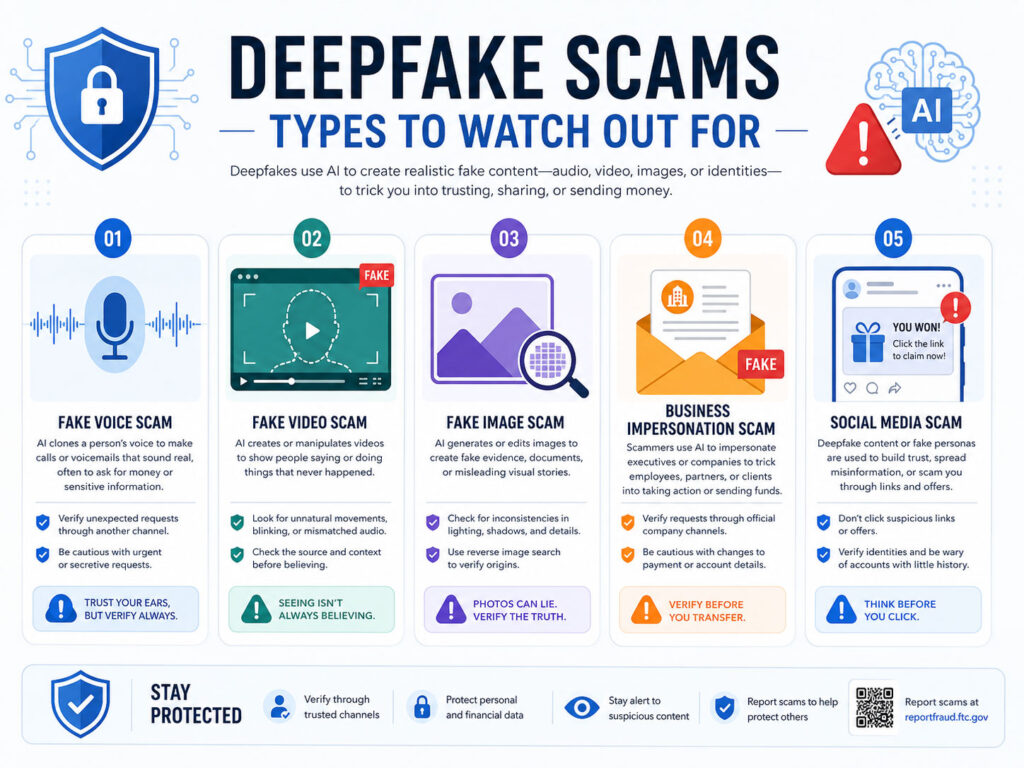
Common Types of Deepfake Scams
Deepfake scams can appear in different forms.
| Type | How It Can Be Misused |
|---|---|
| Voice Deepfake | Fake voice messages asking for money or urgent help |
| Video Deepfake | Fake videos showing someone saying or doing something false |
| Image Deepfake | Fake images used for misinformation or identity misuse |
| Business Impersonation | Fake manager or client voice asking for payment or data |
| Social Media Scam | Fake celebrity or influencer content promoting fraud |
How Voice Deepfake Scams Work
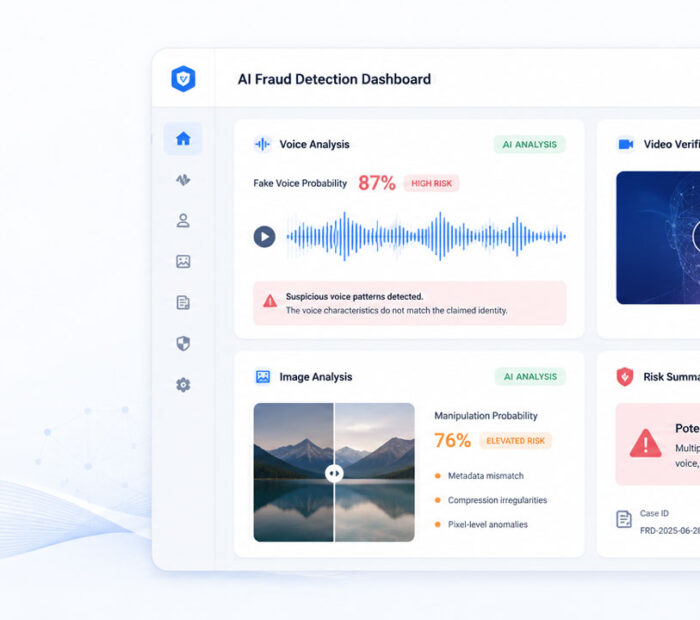
Voice deepfake scams use AI-generated audio to copy or imitate someone’s voice.
For example, you may receive a call or voice message that sounds like a family member asking for urgent money. In another case, an employee may receive a fake voice message that sounds like a manager requesting a payment or confidential file.
The scam usually creates urgency so that the victim reacts quickly.
If a voice message asks for money, passwords, OTPs, banking details, or sensitive information, verify it through another trusted method before taking action.
How Video Deepfake Scams Work
Video deepfake scams use AI-generated or edited video to make fake content look realistic.
A fake video may show a person giving advice, promoting an investment, asking for donations, or supporting a suspicious product. Sometimes, scammers use such videos to make fraud look more trustworthy.
However, a video alone should not be treated as proof. Always check the source, context, and official channels before trusting it.
How Fake AI Images Can Mislead Users
AI-generated images can also support scams and misinformation.
For example, fake screenshots, fake product photos, fake identity images, or fake event images may be shared online to influence people.
Some images may look realistic at first. Still, small details such as strange text, unnatural hands, broken logos, mismatched shadows, or odd backgrounds can indicate possible manipulation.
Warning Signs of Deepfake Content
Deepfake content may not always be easy to identify, but some warning signs can help.
| Warning Sign | What to Check |
|---|---|
| Urgent Request | The message asks you to act immediately |
| Unusual Behavior | The person says something unexpected or out of character |
| Poor Sync | Lip movement and voice do not match properly |
| Odd Audio | The voice sounds robotic, flat, or slightly unnatural |
| Visual Errors | Face, lighting, hands, or background look strange |
| Unknown Source | The content comes from an unverified account or random link |
If you notice more than one warning sign, pause and verify the content before trusting it.
How to Protect Yourself from Deepfake Scams
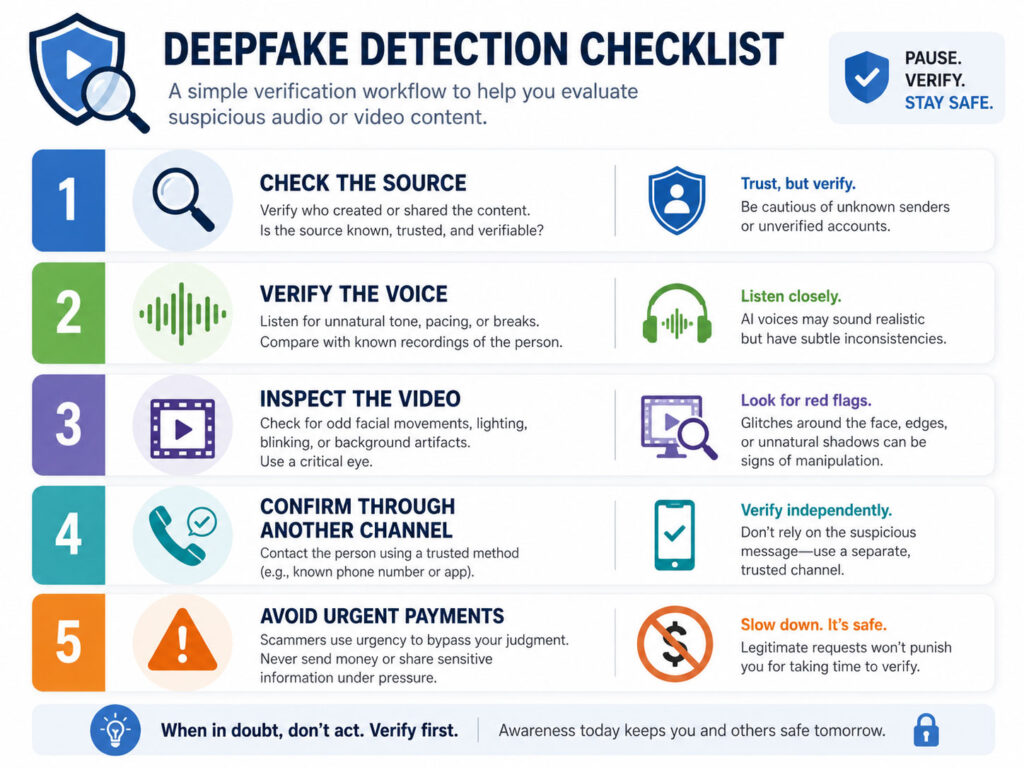
You can reduce deepfake scam risk by slowing down and verifying the message before acting.
If someone asks for money, private data, password reset, business payment, or urgent help, do not rely only on voice or video proof.
- Call the person back using a known phone number.
- Verify requests through another trusted communication channel.
- Do not share OTPs, passwords, PINs, or banking details.
- Check official social media accounts or websites for public claims.
- Be careful with urgent money requests from unknown or unusual channels.
- Discuss a family verification word for emergency situations.
- Report suspicious accounts, videos, or messages when possible.
These habits can help you avoid emotional and urgent decision-making.
Deepfake Safety Tips for Families
Families should also prepare for voice and video impersonation scams.
For example, a scammer may pretend to be a child, parent, friend, or relative in an emergency. The message may ask for urgent money and request secrecy.
To stay safer, agree on a simple verification method. You can ask a question only the real person knows or call them through a trusted number before sending money.
Deepfake Safety Tips for Businesses
Businesses should be careful with payment approvals, vendor changes, and confidential data requests.
A fake voice or video request should not be enough to approve a financial transaction. Teams should follow written approval rules and verify unusual requests through official channels.
- Use multi-step approval for payments.
- Verify bank detail changes through official contacts.
- Train employees to question unusual urgent requests.
- Use secure internal communication tools.
- Document approval processes clearly.
These steps can reduce the risk of business impersonation scams.
What to Do If You Suspect a Deepfake Scam
If you suspect a deepfake scam, stop communication and verify the situation.
Do not send money or personal details until you confirm the request from a trusted source. If you already shared information, change passwords, secure accounts, and contact your bank or service provider if needed.
You should also save evidence, such as screenshots, phone numbers, email addresses, or profile links. This can help when reporting the scam.
Conclusion
Deepfake Scams show how AI-generated images, voice, and videos can create new online risks.
Although deepfake content can look or sound real, you should not trust urgent requests without verification. Check the source, confirm through another channel, and avoid sharing sensitive details quickly.
With careful thinking and simple safety habits, you can protect yourself, your family, and your business from many deepfake-related scams.

AboutTPJ Technical Team
The Project Jugaad Technical Team creates practical, easy-to-follow content on software development, web technologies, artificial intelligence, cybersecurity, cloud platforms, and digital tools. Our articles are informed by more than 13 years of hands-on experience with .NET, Angular, SQL Server, AWS, WordPress, Linux hosting, application deployment, and real-world troubleshooting. Each guide is researched, reviewed, and updated to provide accurate, useful, and actionable information for developers, businesses, and everyday technology users.